

Why Am I Not Losing Weight on Wegovy? Nine Reasons, a Diagnostic Table and What the Trials Call Normal
Not losing weight on Wegovy? Check the timeline, then nine reasons: dose, plateau, calories, diabetes, medicines, sleep, product, water, true non-response.
Written by Diana Gangan. Updated October 27, 2026.
If you are not losing weight on Wegovy, the first question is not why but when. In the first eight to twelve weeks you are on starting doses that are not meant to produce much weight loss, and the trials show that most of the result arrives between months three and twelve on the full 2.4 mg dose. The second question is how much counts as not losing. In the STEP 1 trial, 86% of people lost at least 5% of their body weight by 68 weeks, which means 14% did not, and that group is real and worth understanding. Between those two facts sit nine specific reasons a person on Wegovy sees the scale stall: under-dosing, a plateau that is actually normal, diabetes, other medicines, calorie creep, sleep, a product or storage problem, water and muscle, and the small group for whom semaglutide simply does not work and tirzepatide might.
This guide gives you a way to tell them apart. Start with the timeline, check your weight loss against the trial numbers, then use the diagnostic table to match what you are seeing with the likeliest cause and the fix.
Not Losing Weight on Wegovy: The Short Answer
- 1Weeks 1 to 8: little loss is normal. The 0.25 mg and 0.5 mg doses are escalation steps, not treatment doses.
- 2By month 3 to 4 (first weeks at 1.7 to 2.4 mg): most people have lost 5 to 8%. Under 5% at this point with good adherence is the definition of a slow responder.
- 3By 68 weeks: average loss 15% without diabetes, about 10% with diabetes. 86% lose at least 5%; 14% do not.
- 4The nine common reasons, roughly in order of frequency: still on a low dose; a normal plateau after month 9 to 12; eating back the deficit; type 2 diabetes or insulin; medicines that cause weight gain; poor sleep or high stress; a compounded, expired or badly stored product; water retention or muscle gain masking fat loss; true non-response.
- 5What to do: confirm you are at 2.4 mg and have been for 12 weeks; weigh and measure weekly rather than daily; track food for two weeks; review medicines; and if under 5% after three months at full dose, talk to your prescriber about switching to tirzepatide.
First, Where Are You on the Timeline?
Wegovy's dose ladder is 0.25 mg for four weeks, 0.5 mg for four, 1 mg for four, 1.7 mg for four, then 2.4 mg from month five. The low doses exist to let the gut adapt, and they do not produce much weight loss; in the trials, people had lost about 2% by week 4 and about 6% by week 12, with the steep part of the curve arriving once they reached the higher doses. If you are in month two and have lost three pounds, you are on schedule. The whole curve, month by month, is in how long Wegovy takes to work, and the dose schedule with what to do about missed shots is in the Wegovy dosing schedule.
What the STEP trials say is normal on Wegovy
Week 4
0.25 mg
About 2%
About 1%
Normal; keep going
Week 12
1 to 1.7 mg
About 6%
About 3 to 4%
Normal if some loss; check adherence if none
Week 20
2.4 mg
About 10%
About 6%
Under 5% here: slow responder; review the nine reasons
Week 28
2.4 mg
About 12%
About 7%
Under 5%: formal non-response; discuss alternatives
Week 68
2.4 mg
About 15% (STEP 1)
About 10% (STEP 2)
Plateau is expected around here
The Nine Reasons, and How to Tell Which Is Yours
Diagnosing a stall on Wegovy
Lost a few pounds, now flat; still on 0.5 or 1 mg
1. Dose too low: you have not reached the treatment dose
Continue the ladder; ask your prescriber to escalate on time; loss usually resumes at 1.7 to 2.4 mg
Lost 12 to 15% over 9 to 12 months, now flat for 6 weeks
2. Plateau: your body's new set point
This is the trial result, not a failure. Hold the loss, build muscle, or discuss tirzepatide if more loss is medically needed
Appetite is back; snacks and portions crept up; weekends undo the week
3. Eating back the deficit
Two weeks of a food log; protein first; the drug lowers hunger but does not stop habit eating
Type 2 diabetes, especially on insulin or a sulfonylurea
4. Diabetes blunts loss; insulin promotes fat storage
Expect about two thirds of the non-diabetes result; ask whether insulin or sulfonylurea doses can come down
Started or take antidepressants, antipsychotics, steroids, gabapentin, beta blockers, insulin, some antihistamines
5. Weight-promoting medicines
Do not stop them; ask your prescriber whether a weight-neutral alternative exists
Under 6 hours of sleep; constant stress; night eating
6. Sleep and cortisol
Sleep is the cheapest fix: 7 hours raises appetite hormone control and halves night snacking
Using compounded semaglutide, pens that froze or sat in a hot car, pens past 28 days out of the fridge
7. Product or storage problem
Switch to branded pens if possible; check storage rules; replace suspect pens
Clothes looser, scale unchanged; new to strength training; period week; very salty week
8. Water or muscle masking fat loss
Measure waist and take photos monthly; weigh weekly at the same time; judge trends over 4 weeks
At 2.4 mg for 12 weeks, adherent, food log clean, under 5% lost
9. True non-response
About 1 in 7 people. Ask about switching to tirzepatide, which produced 20.2% versus 13.7% in the head-to-head trial
Reason 1: You Are Not at the Treatment Dose Yet
This is the commonest reason by far and the easiest to miss, because people feel the appetite effect from the first injection and assume the drug is fully working. It is not. The STEP trials compared 2.4 mg with lower doses, and the difference is large: at 1 mg, semaglutide produces about 7% loss in people with diabetes; at 2.4 mg, about 10%; in people without diabetes the gap is similar. If supply problems, side effects or an insurer's step rules have parked you at 1 mg for months, the stall has a simple explanation. Some people do need to stay at a lower dose for tolerability, and the label allows a 1.7 mg maintenance dose, but the comparison is with 2.4 mg, not with doing nothing.
Reason 2: The Plateau Is the Result, Not the Problem
In every semaglutide trial the weight curve flattens between weeks 50 and 70. That is not the drug wearing off; blood levels are unchanged. It is the body reaching a new equilibrium at a lower weight, where a smaller body burns fewer calories and the reduced intake now matches it. A plateau after losing 12 to 15% is the trial outcome. The decision at that point is whether the weight you have reached is enough for your health goals, and if it is not, whether a stronger drug or a structured period of resistance training to raise resting metabolism makes sense. What a plateau is not is a reason to stop; stopping is what reverses the loss, as the withdrawal data in what happens when you stop taking Wegovy shows.
Reasons 3 to 6: The Everyday Ones
Semaglutide reduces hunger; it does not police what you eat when you are not hungry. The three-month honeymoon, when food genuinely does not appeal, fades for most people into a state where small portions are easy but a second helping, a glass of wine or an evening of grazing is entirely possible, and liquid calories slide past the fullness signal altogether. A two-week food log, written down rather than remembered, is the single most informative thing a stalled person can do, and it usually finds 300 to 500 calories a day nobody was counting. Protein matters because it is filling and protects muscle; aim for a palm-sized portion at every meal. Sleep matters because under six hours a night raises ghrelin, the hunger hormone, and lowers leptin, which partly undoes what the drug is doing. Diabetes and weight-promoting medicines are the two reasons that need a prescriber: insulin and sulfonylureas push the body toward fat storage, and a long list of common drugs, from mirtazapine to prednisone to some beta blockers, add weight. None of these should be stopped on your own, but all can be reviewed. Five practical levers are set out in five ways to boost weight loss on Wegovy.
Reason 7: The Problem Might Be the Product
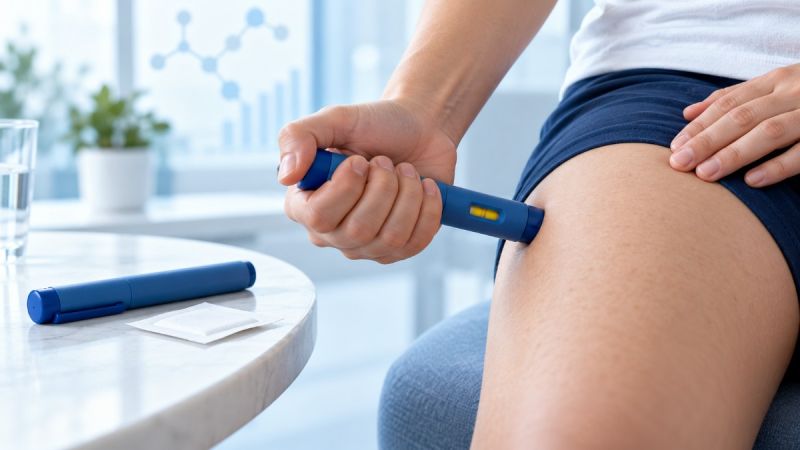
Branded Wegovy is a consistent dose of semaglutide. Compounded semaglutide is not guaranteed to be: FDA testing and independent analyses have found under-dosed vials, wrong salts and vials with no detectable drug. If you are on a compounded product and not losing, the product is the first suspect. Branded pens have their own failure modes: a pen that froze in the fridge's back wall, sat in a hot car, or has been out of refrigeration for more than 28 days may deliver less than its dose, and a pen lifted off the skin before the yellow bar stopped moving delivers a partial one. The storage rules are in how long Wegovy can be out of the fridge, and the two clicks and the yellow bar are explained in how to use the Wegovy pen.
Reason 8: The Scale Is Lying to You, a Little
Body weight on any given morning swings by one to two kilograms with salt, carbohydrates, hormones, bowel contents and hydration, and people who start lifting weights on Wegovy, which they should, add muscle that weighs more than the fat it replaces. A tape measure around the waist, monthly photos in the same clothes and the fit of a specific pair of trousers are better instruments for a four-week trend than the daily number. Weigh once a week, same day, same time, after the bathroom and before breakfast, and judge the direction over a month.
Reason 9: You May Be a Non-Responder
About one person in seven in the trials lost less than 5% of their body weight despite full dosing, and roughly one in ten lost essentially nothing. Nobody fully understands why; genetics, gut hormone signalling and the degree to which a person's eating is driven by hunger rather than habit all seem to play a part. The practical definition is under 5% lost after three months at 2.4 mg with good adherence and no obvious cause from the list above. At that point the evidence favours switching rather than persisting: in the SURMOUNT-5 head-to-head trial, tirzepatide produced 20.2% weight loss against 13.7% for semaglutide, and people who responded poorly to one GLP-1 drug often respond to the dual-agonist. The comparison is in Zepbound vs Wegovy; coverage rules for a switch are in does insurance cover Wegovy.
What Not to Do
- 1Do not increase the dose yourself or shorten the interval between injections; the label maximum is 2.4 mg weekly and more does not help
- 2Do not add a second GLP-1 drug or stack compounded products
- 3Do not cut calories below about 1,200 a day; it stalls loss through muscle loss and fatigue, as explained in does Wegovy make you tired
- 4Do not stop the drug because of a plateau; regain follows within months
- 5Do not judge progress on a single weigh-in
When to Talk to Your Doctor
- 1If you have been at 2.4 mg for 12 weeks with under 5% loss and a clean food log
- 2If you take insulin, a sulfonylurea, or any of the weight-promoting medicines listed above
- 3If you have symptoms of an underactive thyroid, PCOS, Cushing's or untreated sleep apnea, each of which can block weight loss
- 4If you are using compounded semaglutide and not responding
- 5If you have plateaued at a weight that still leaves you with uncontrolled blood pressure, sugar or joint disease
The Bottom Line
Not losing weight on Wegovy usually has a boring explanation: you are not at 2.4 mg yet, you have reached the plateau the trials predicted, or calories have crept back in. Those three cover most stalls and all three have fixes that do not involve changing the drug. Diabetes, medicines, sleep, product quality and the scale's daily noise account for most of the rest. What remains is the one person in seven for whom semaglutide does not work well, and for them the answer in 2026 is a different drug, not more patience. Check the timeline, check the dose, log the food for two weeks, and then decide. What a realistic result looks like for someone who does respond is in how much weight you can lose on Wegovy.
FAQ
Most often because you are still on a starting dose, have reached the normal plateau after 9 to 12 months, or are eating back the calorie deficit. Diabetes, weight-promoting medicines, poor sleep, a compounded or badly stored product, and water or muscle masking fat loss explain most of the rest. About 1 in 7 people are true non-responders.
Trial participants lost about 2% by week 4, 6% by week 12, 10% by week 20 and 15% by week 68. The low starting doses in the first two months produce little loss; the steep part of the curve begins at 1.7 to 2.4 mg.
Yes. The 0.25 mg starting dose is designed to reduce side effects, not weight. Little or no loss in the first four weeks is expected.
Give it 12 weeks at 2.4 mg with a two-week food log, review medicines and sleep, and check product storage. If you have lost under 5% at that point, you meet the definition of a non-responder and switching to tirzepatide is the evidence-based next step.
Not immune, but about 14% of trial participants lost less than 5% of their body weight despite full dosing, and roughly 10% lost almost nothing. The reasons are not fully understood. Many such people respond to tirzepatide.
No. Blood levels of the drug are unchanged; the body has reached a new equilibrium at a lower weight, which in the trials happened around week 60. Stopping the drug at a plateau leads to regain.
Sources
- 1Wegovy (semaglutide) injection prescribing information, Novo Nordisk
- 2Wilding JPH et al. Once-weekly semaglutide in adults with overweight or obesity (STEP 1), New England Journal of Medicine, 2021
- 3Davies M et al. Semaglutide 2.4 mg once a week in adults with overweight or obesity and type 2 diabetes (STEP 2), The Lancet, 2021
- 4Aronne LJ et al. Tirzepatide as compared with semaglutide for the treatment of obesity (SURMOUNT-5), New England Journal of Medicine, 2025
- 5Ghusn W et al. Weight loss outcomes associated with semaglutide treatment for patients with overweight or obesity, JAMA Network Open, 2022
- 6Rubino D et al. Effect of continued weekly subcutaneous semaglutide vs placebo on weight loss maintenance (STEP 4), JAMA, 2021
- 7FDA's concerns with unapproved GLP-1 drugs used for weight loss, U.S. Food and Drug Administration
General information from published trials and labels; not a substitute for advice from your prescriber.

Diana Gangan
Author
Comments (0)
Be the first to comment on this article.
More articles

Does Insurance Cover Wegovy? Employer Plans, Medicare, Medicaid, Prior Authorization and Appeals in 2026
October 25, 2026
How to Use the Wegovy Pen: Step by Step From the Label, Plus the Problems the Label Does Not Cover
October 24, 2026

What Does Wegovy Do? How It Works in Your Body, Organ by Organ
October 23, 2026
