
What Does Wegovy Do? How It Works in Your Body, Organ by Organ
What Wegovy does to appetite, stomach, blood sugar, heart and liver; how much weight it takes off (15% to 21%); what it does not do; what happens when you stop.
Written by Diana Gangan. Updated October 24, 2026.
Wegovy makes you less hungry, keeps you full longer after smaller meals, and steadies your blood sugar, so you eat less without a constant fight. Over about a year and a half, that adds up to around 15% of body weight lost at the standard 2.4 mg dose, and about 21% at the new 7.2 mg Wegovy HD dose. It also does things that have nothing to do with the scale: in people with heart disease it cut heart attacks, strokes and cardiovascular deaths by 20%, and it is approved to treat the liver disease MASH.
Here is what Wegovy does in each part of your body after the weekly injection, what the numbers look like, what it does not do, and what happens when you stop.
What Does Wegovy Do? The Short Answer
- 1Active ingredient: semaglutide, a long-acting copy of the gut hormone GLP-1, taken once a week by injection (or daily as the Wegovy pill, approved December 2025).
- 2In the brain: lowers hunger and food cravings, so you eat less.
- 3In the stomach: slows emptying, so you feel full sooner and for longer.
- 4In the pancreas and liver: boosts insulin when sugar is high and cuts the liver's sugar output, which steadies blood glucose.
- 5In the heart and blood vessels: 20% fewer major cardiovascular events in people with existing heart disease (SELECT trial).
- 6In the liver: resolves MASH (fatty liver inflammation) in about 63% of people versus 34% on placebo.
- 7Average weight loss: about 15% at 2.4 mg over 68 weeks; about 21% at 7.2 mg (Wegovy HD).
- 8What it does not do: burn fat directly, speed up metabolism, or keep weight off after you stop.
How Wegovy Works: The Hormone It Copies
After you eat, cells in your gut release GLP-1 (glucagon-like peptide-1), a hormone that tells your brain food has arrived, tells your pancreas to release insulin, and slows your stomach. Natural GLP-1 lasts only a couple of minutes before the body breaks it down. Semaglutide is a modified version built to resist that breakdown and bind to a protein in the blood, so a single dose keeps working for about a week. In effect, Wegovy keeps your body's own "I've eaten" signal switched on. For the wider drug family, see GLP-1 drugs explained.
What Wegovy Does in Each Part of Your Body
Wegovy, organ by organ
Brain (hypothalamus and reward centers)
Activates GLP-1 receptors that control hunger and the reward value of food
Less hunger, fewer cravings, quieter "food noise," less interest in alcohol for some people
Stomach
Slows how fast food leaves the stomach, especially in the first months
Full after smaller portions; sometimes nausea, burping or reflux
Pancreas
Increases insulin release only when blood sugar is high; lowers glucagon
Steadier blood sugar after meals; very low risk of hypoglycemia on its own
Liver
Reduces sugar production and fat buildup
Better fasting glucose; improvement in fatty liver and MASH
Heart and blood vessels
Lowers inflammation, blood pressure, LDL cholesterol and triglycerides, partly through weight loss and partly directly
20% fewer heart attacks, strokes and cardiovascular deaths in people with heart disease
Kidneys
Reduces protein in urine and slows kidney function decline in people with diabetes and kidney disease
Measured in blood tests rather than felt
Fat tissue
No direct fat-burning effect; fat is lost because calorie intake falls
Weight loss from all fat stores, including belly fat; some lean mass is lost too
What Does Wegovy Do to Your Appetite?
This is the effect people notice first, often within the first week or two. Hunger between meals fades, portions shrink on their own, and many people describe a quieting of constant thoughts about food. Trials that measured intake found people on semaglutide ate roughly 25% to 35% fewer calories at a buffet meal without being asked to. The effect is dose-related, which is why Wegovy starts at 0.25 mg and climbs over 16 weeks to 2.4 mg; the low doses are for your stomach to adjust, not for weight loss. See the Wegovy dosing schedule.
What Does Wegovy Do to Your Stomach?
Semaglutide slows gastric emptying, the rate at which food moves from the stomach into the intestine. That is why a modest meal can leave you full for hours, and it is also the source of the most common side effects: nausea (about 44% of people in STEP 1), diarrhea (30%), vomiting (24%), constipation (24%) and burping. These are strongest after dose increases and usually ease within weeks. The slowing is most pronounced early in treatment and lessens over time. Eating smaller meals, avoiding fatty or very sweet foods and not lying down after eating help. Rarely, severe slowing (gastroparesis) or gallbladder problems occur. Our side effects page has the full list.
What Does Wegovy Do to Blood Sugar?
Semaglutide is the same molecule as Ozempic, a diabetes drug, so Wegovy lowers blood sugar too. It prompts the pancreas to release insulin when glucose is high and suppresses glucagon, the hormone that tells the liver to release sugar. In people with type 2 diabetes it lowers A1C by about 1.5 to 2 percentage points. In people without diabetes, blood sugar stays normal; because the insulin effect is glucose-dependent, Wegovy on its own does not cause dangerous lows. It can, however, if you also take insulin or a sulfonylurea, which is why those doses often need lowering. In the STEP 1 trial, 84% of people with prediabetes returned to normal blood sugar on semaglutide.
How Much Weight Does Wegovy Take Off?
Wegovy weight loss by dose and population
STEP 1
Adults with obesity, no diabetes
2.4 mg weekly
14.9% (placebo 2.4%)
68 weeks
STEP 2
Adults with obesity and type 2 diabetes
2.4 mg weekly
9.6% (placebo 3.4%)
68 weeks
STEP UP
Adults with obesity, no diabetes
7.2 mg weekly (Wegovy HD)
About 20.7% (2.4 mg arm 17.5%)
72 weeks
OASIS 4
Adults with obesity, no diabetes
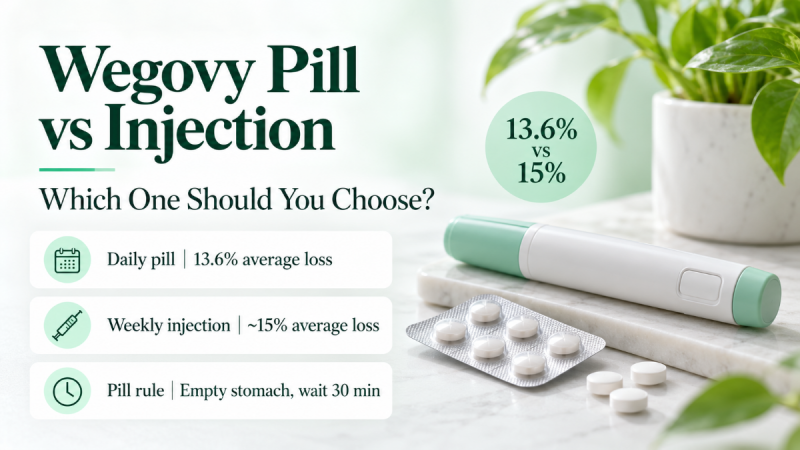
25 mg oral daily (Wegovy pill)
About 13.6% (placebo 2.2%)
64 weeks
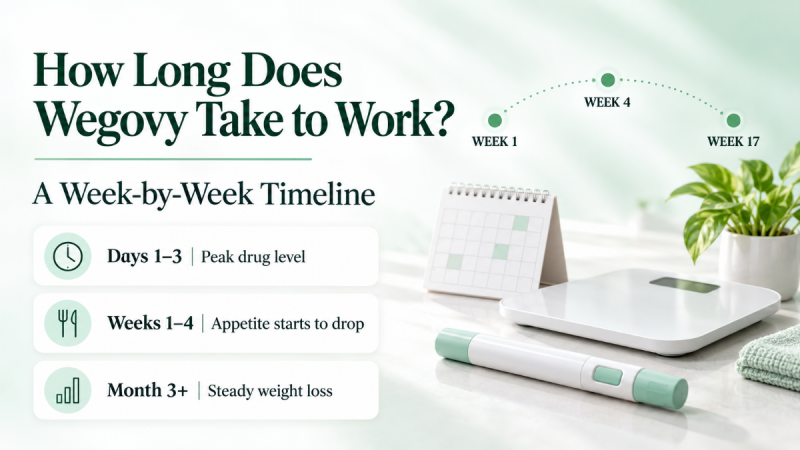
In STEP 1, about a third of people lost 20% or more of their body weight. The weight comes off fastest between months three and six, slows after month nine and plateaus somewhere between 12 and 18 months. We break down the timeline in how long Wegovy takes to work and the ranges in how much weight you can lose on Wegovy. For how the pill compares, see Wegovy pill vs injection.
What Does Wegovy Do for Your Heart?
This is the result that changed how doctors see the drug. In the SELECT trial, 17,604 adults with overweight or obesity and existing cardiovascular disease, but no diabetes, took semaglutide 2.4 mg or placebo for about three years. Semaglutide reduced the combined rate of heart attack, stroke and cardiovascular death by 20%. The benefit appeared early, before most of the weight loss, which suggests semaglutide acts on the heart and blood vessels directly as well as through weight. On the back of SELECT, FDA approved Wegovy in March 2024 to reduce cardiovascular risk in people with heart disease and excess weight.
What Does Wegovy Do for Your Liver?
In August 2025 Wegovy became the first GLP-1 drug approved for MASH (metabolic dysfunction-associated steatohepatitis, previously called NASH), a form of fatty liver disease with inflammation and scarring. In the ESSENCE trial, 62.9% of people on semaglutide had their MASH resolve without worsening scarring, versus 34.3% on placebo, and 37% saw scarring improve versus 22.4%. The approval covers adults with moderate to advanced fibrosis (stages F2 to F3) and is accelerated, meaning a longer confirmatory trial is still running.
What Wegovy Does Not Do
- 1It does not burn fat or raise your metabolism. Weight falls because you take in fewer calories; as you get lighter, your body actually burns slightly less at rest.
- 2It does not target belly fat specifically, although visceral fat falls along with total fat.
- 3It does not build muscle. Some lean mass is lost with the fat, which is why protein intake and strength training matter.
- 4It does not cure obesity. In the STEP 1 extension, people who stopped semaglutide regained about two-thirds of the lost weight within a year.
- 5It does not replace diabetes treatment unless prescribed for that; Wegovy is approved for weight, heart and liver indications, Ozempic for diabetes. See Wegovy vs Ozempic.
What Does Wegovy Do When You Stop?
The appetite effect fades as the drug leaves your body, roughly five to seven weeks after the last injection, and hunger returns to its old level. In the STEP 1 extension, people who stopped semaglutide and lifestyle support regained about 11.6 of the 17.3 percentage points they had lost by one year later. Blood pressure, blood sugar and cholesterol improvements mostly reversed too. That is why Wegovy is approved for long-term use and why stopping is best planned with a doctor. Our guide to what happens when you stop taking Wegovy covers tapering and maintenance.
How Wegovy Compares With Zepbound
Zepbound (tirzepatide) copies two gut hormones, GLP-1 and GIP, instead of one. In the SURMOUNT-5 head-to-head trial it produced about 20% weight loss versus 14% for Wegovy 2.4 mg over 72 weeks. Wegovy HD at 7.2 mg narrows that gap, and Wegovy alone has the heart-protection and MASH approvals. Side effects are similar. See Zepbound vs Wegovy for the full comparison.
When to Talk to Your Doctor
- 1Before starting, if you have had pancreatitis, gallbladder disease, diabetic eye disease, or a personal or family history of medullary thyroid cancer or MEN 2
- 2If you take insulin or a sulfonylurea, so the doses can be adjusted
- 3If nausea or vomiting lasts more than a few days, or you cannot keep fluids down
- 4If you have severe stomach pain that does not go away, with or without vomiting (possible pancreatitis or gallstones)
- 5If you feel unusually tired or low in energy for weeks; see does Wegovy make you tired
- 6If you are planning pregnancy; Wegovy should be stopped at least two months before
The Bottom Line
Wegovy copies the gut hormone GLP-1 to lower appetite, slow digestion and steady blood sugar, which leads to about 15% weight loss at the standard dose and about 21% at the high dose. Beyond the scale, it reduces heart attacks and strokes in people with heart disease and treats MASH. It does not burn fat or change your metabolism, its effects stop when the drug stops, and its most common side effects come from the same slowed stomach that makes it work. For the long view on safety, read GLP-1 long-term side effects.
FAQ
Wegovy lowers appetite in the brain, slows stomach emptying, improves insulin release and reduces the liver's sugar output. The result is eating less and losing about 15% of body weight over 68 weeks, plus lower cardiovascular risk and improvement in fatty liver disease.
It makes a calorie deficit feel normal by cutting hunger and cravings. People in trials ate roughly a quarter to a third fewer calories without trying and lost 15% of their weight at 2.4 mg, or about 21% at the 7.2 mg Wegovy HD dose.
Not directly. It reduces how much you eat, and your body uses stored fat to make up the difference. Most of the weight lost is fat, but some lean mass is lost too.
In the SELECT trial of 17,604 adults with heart disease, Wegovy cut heart attacks, strokes and cardiovascular deaths by 20% over about three years. FDA approved it for cardiovascular risk reduction in March 2024.
It still lowers appetite and causes weight loss; in fact people without diabetes lose more. Blood sugar stays normal because the insulin effect only switches on when glucose is high.
Sources
- 1Wegovy (semaglutide) injection prescribing information, Novo Nordisk
- 2Once-Weekly Semaglutide in Adults with Overweight or Obesity (STEP 1), NEJM, 2021
- 3Semaglutide 2.4 mg once a week in adults with overweight or obesity, and type 2 diabetes (STEP 2), Lancet, 2021
- 4Semaglutide and Cardiovascular Outcomes in Obesity without Diabetes (SELECT), NEJM, 2023
- 5Phase 3 Trial of Semaglutide in Metabolic Dysfunction-Associated Steatohepatitis (ESSENCE), NEJM, 2025
- 6Weight regain and cardiometabolic effects after withdrawal of semaglutide (STEP 1 extension), Diabetes Obes Metab, 2022
- 7Tirzepatide as Compared with Semaglutide for the Treatment of Obesity (SURMOUNT-5), NEJM, 2025
- 8Wegovy FDA approval history, Drugs.com
This article is for general information and is not medical advice. Talk to your doctor about whether Wegovy is right for you.

Diana Gangan
Author
Comments (0)
Be the first to comment on this article.
More articles